Mold Guide · Elmhurst, IL
Is Mold Remediation Worth It? Honest Answers to Common Questions
Is professional mold remediation worth it? Does it really work? What do professionals use to remove mold? Straight answers to the questions homeowners ask most.
Or call (630) 403-0701
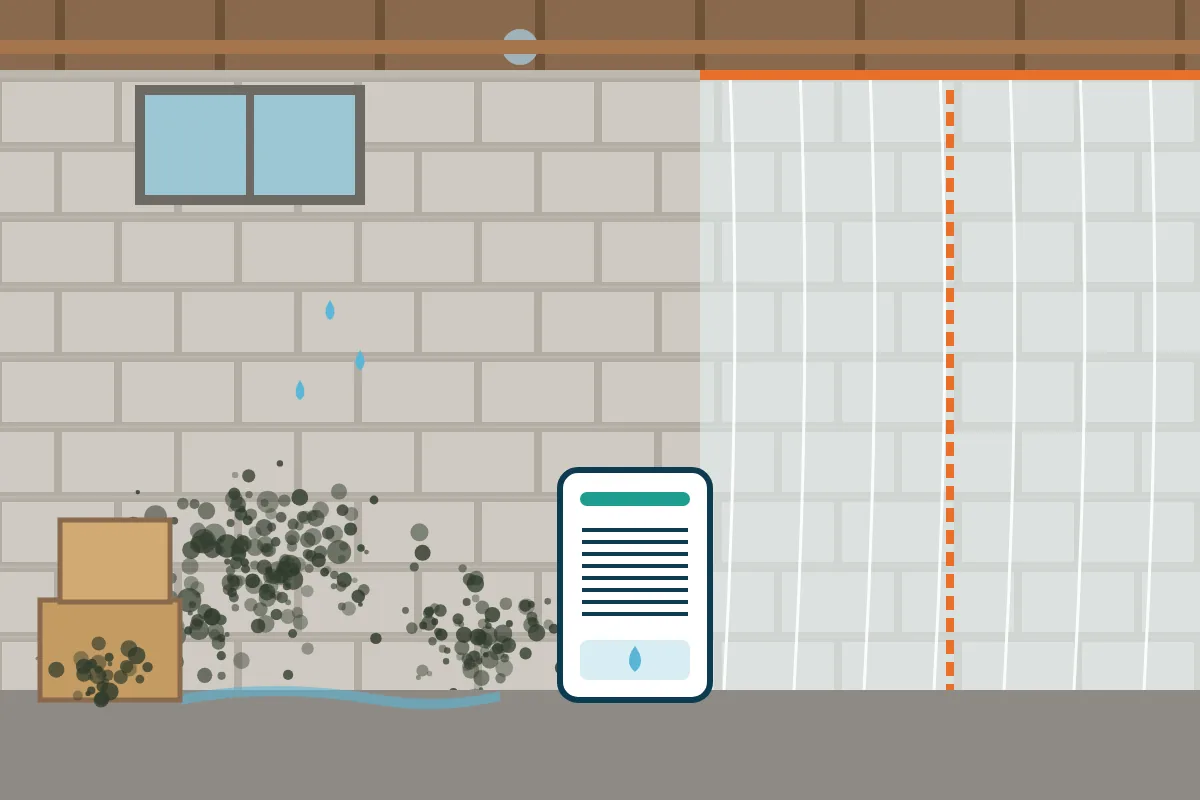
Key Takeaways
- Small surface mold is often a DIY job. The EPA notes homeowners can usually handle areas under about 10 square feet once the moisture is fixed.
- Professional remediation is worth it for larger areas, mold inside walls or HVAC, growth after flooding, or mold that keeps returning.
- Remediation works when the moisture is fixed. Spraying or painting over mold without addressing the source rarely lasts.
Is Mold Remediation Worth It?
It depends on how much mold there is, where it is, and what caused it. Here's an honest way to decide.
DIY Cleanup Is Often Reasonable When:
- The affected area is smaller than about 10 square feet (roughly 3 ft × 3 ft)
- The mold is on hard, non-porous surfaces like tile, glass, or sealed concrete
- You've found and fixed the moisture source
- No one in the home has asthma, allergies, or a weakened immune system
- The water involved was clean — not sewage or floodwater
Professional Remediation Is Usually Worth It When:
- Mold covers a larger area or appears in several rooms
- It's on or inside drywall, insulation, carpet, or a finished basement
- There's a persistent musty odor but you can't find the source
- The growth followed flooding, a sewage backup, or a long-running leak
- Mold may be in the HVAC system or ductwork
- It keeps coming back after cleaning
- Someone in the home has health concerns
Cost matters too. Many mold remediation projects cost approximately $1,200–$3,800, depending on scope. See what affects the cost in Elmhurst.
Why Is Professional Mold Remediation Important?
The value of professional remediation isn't the cleaning product — it's how the work is controlled:
- Containment. Disturbing mold releases particles. Professionals seal off the work area and filter the air so the problem doesn't spread to clean rooms.
- Finding the full extent. Visible growth is often the tip of the problem. Moisture meters and inspection help find wet materials behind walls and under floors.
- Removing what can't be cleaned. Porous materials with growth — drywall, insulation, carpet pad — usually need to be cut out and bagged, not sprayed.
- Fixing the cause. Without addressing the leak, humidity, or water intrusion, mold tends to return.
- Safety. Respirators and protective equipment limit exposure during removal.
What Do Professionals Use to Remove Mold?
| Equipment or Method | What It Does |
|---|---|
| Plastic sheeting containment | Isolates the work area from the rest of the property |
| HEPA air scrubbers / negative air machines | Filter airborne particles and keep air flowing into, not out of, the work area |
| HEPA vacuums | Capture fine particles and debris from surfaces |
| Moisture meters and thermal imaging | Help locate wet materials that may not be visible |
| Respirators, gloves, and protective suits | Protect workers during removal |
| Detergent cleaning and scrubbing | Remove growth from hard and structural surfaces |
| Dehumidifiers and air movers | Dry materials and the space so mold doesn't regrow |
Many professionals follow the IICRC S520 Standard for Professional Mold Remediation, an industry standard that sets out procedures for containment, removal, and verification.
Which Mold Remediation Methods Do Companies Choose?
The right method depends on the material — not on a single product or technique:
| Method | Typically Used For | Notes |
|---|---|---|
| HEPA vacuuming and damp wiping | Hard, non-porous surfaces | Removes growth physically rather than just killing it |
| Removal and disposal | Drywall, insulation, carpet, ceiling tiles | Standard approach for porous materials with growth |
| Sanding, wire brushing, or media blasting | Structural wood like framing, joists, attic sheathing | Physically removes growth from surfaces that stay in place |
| Antimicrobial treatments and encapsulants | Cleaned surfaces, as a supplement | Not a substitute for removing growth |
| Fogging | Occasionally as an add-on | Does not remove mold from materials on its own |
Be cautious of any proposal that relies only on spraying, fogging, or painting over mold without removing affected materials or fixing the moisture.
Does Mold Remediation Really Work?
Yes — when it's done properly. Remediation works when three things happen: the moisture source is corrected, affected materials are removed or cleaned, and the area is dried.
Why Remediation Sometimes Fails
- The leak, humidity, or water intrusion was never fixed
- Mold was sprayed or painted over instead of removed
- Hidden growth inside walls or under floors was missed
- The area wasn't contained, so particles spread to other rooms
- Materials were closed up before they were fully dry
How to Tell the Job Worked
- No visible mold growth or mold-related residue remains
- The musty odor is gone
- Affected materials are dry
- The moisture source has been corrected
- Where needed, post-remediation verification — such as a visual inspection or mold testing — confirms the result
How to Choose the Best Mold Remediation Services Near Me in Elmhurst, IL
Ask any company you're considering:
- What do you think is causing the moisture, and how will it be addressed?
- Which materials will be removed, and which cleaned?
- How will the work area be contained?
- Is testing actually necessary in my situation?
- How will we know the job is complete?
- Is the scope and price in writing?
Elmhurst Mold Pros is based in Elmhurst and serves nearby communities including Villa Park, Lombard, Addison, and Oak Brook. Call (630) 403-0701 to talk through your situation.
Have a Mold Question About Your Property?
Call Elmhurst Mold Pros to talk through what you're seeing and the right next step.
Call (630) 403-0701