Elmhurst, IL
Black Mold Remediation in Elmhurst, IL
Dark, greenish-black growth on drywall, wood, or around a leak is one of the most alarming things a homeowner can find. Whether or not it is the mold people usually mean by "black mold," it is a sign that moisture has been present long enough for mold to grow.
Elmhurst Mold Pros provides black mold remediation for homes and businesses in Elmhurst, IL. We focus on removing affected materials safely and addressing the moisture that allowed the growth to develop.
Or call (630) 403-0701
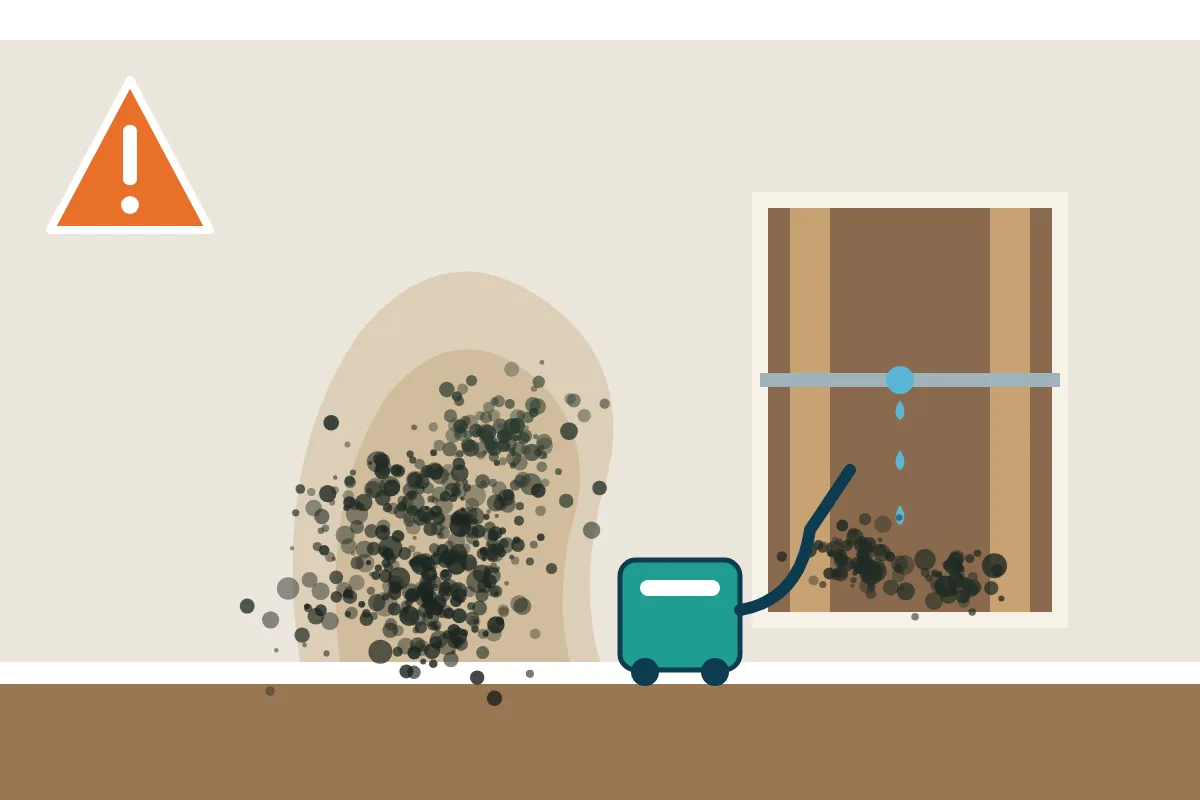
Black Mold Remediation for Elmhurst Homes
"Black mold" usually refers to Stachybotrys chartarum, a greenish-black mold that grows on materials such as drywall paper, ceiling tiles, and wood after they stay wet for an extended period. But many common indoor molds are dark in color, so a black patch is not necessarily Stachybotrys.
The good news is that the response is the same either way: remove the growth safely, address affected materials, and fix the moisture source. Dark mold commonly appears in Elmhurst homes:
- On basement drywall and framing after water intrusion
- Behind or below walls where a plumbing leak went unnoticed
- Under sinks and around dishwashers or washing machines
- On ceilings below roof or bathroom leaks
- On window frames and sills with repeated condensation
- On stored cardboard, fabric, or paper in damp areas
What Is Black Mold?
Stachybotrys chartarum
Stachybotrys is the mold most often called "black mold" or "toxic black mold." It tends to look slimy when wet and sooty when dry, and it typically needs materials that stay wet for days or weeks. Its presence usually points to a significant or long-running moisture problem.
Other Dark-Colored Molds
Molds such as Cladosporium, Alternaria, and some Aspergillus species can also look dark green, brown, or black. You cannot identify a mold species by color alone — that requires laboratory analysis. Our guide on how to identify different types of indoor mold explains the most common ones.
Is Black Mold More Dangerous Than Other Mold?
Some molds, including Stachybotrys, can produce compounds called mycotoxins. However, public health agencies such as the CDC and EPA advise treating all indoor mold growth the same way: remove it and correct the moisture problem, regardless of type. Mold exposure can cause symptoms such as a stuffy nose, coughing, wheezing, or eye and skin irritation in sensitive people. If you have health concerns, talk with a medical professional.
Do You Need Testing to Confirm Black Mold?
Usually not. If dark mold growth is visible and there is a known moisture problem, the corrective steps are the same whatever the species. Mold testing may be useful when you need to answer a specific question — for example, for documentation, or when a musty odor is present but the source can't be found.
Our Black Mold Remediation Process
Assess the Area and the Moisture Source
We review the visible growth, the affected materials, and what is keeping them wet. If the source or extent is unclear, a mold inspection may come first.
Contain the Work Area
Plastic sheeting and, where appropriate, negative air pressure with HEPA filtration help keep disturbed particles from spreading to the rest of the property.
Remove Affected Porous Materials
Drywall, insulation, carpet, and similar materials with growth that can't be adequately cleaned are carefully cut out, bagged, and removed.
Clean Remaining Surfaces
Non-porous and structural surfaces are HEPA-vacuumed and cleaned according to the scope of work.
Dry the Area
Affected materials need to be dried. Dehumidification and air movement may be used where appropriate.
Review and Prevent
We walk you through what was done and the moisture conditions that need to stay corrected so the mold is less likely to return.
What Not to Do If You Find Black Mold
- Don't scrub or dry-brush it. This can release particles into the air.
- Don't paint or caulk over it. Mold can continue growing underneath while the moisture remains.
- Don't rely on bleach for porous materials. Bleach may lighten the stain on drywall or wood without removing growth within the material.
- Don't point fans at the area or run HVAC through it. Moving air can spread particles to other rooms.
- Don't ignore the water source. Removing mold without fixing the leak or dampness rarely lasts.
Black Mold Removal Cost in Elmhurst, IL
Black mold remediation is priced the same way as other mold work — by scope, not by color. Many mold remediation projects cost approximately $1,200–$3,800, but this is a broad estimate, not a quote. See what affects mold remediation cost.
The biggest factors are the size of the affected area, how much material needs to be removed, whether growth extends into wall cavities, and the moisture repair required.
Black Mold Remediation FAQs
Is black mold toxic?
Some molds, including Stachybotrys chartarum, can produce mycotoxins, which is why it is often called "toxic black mold." However, health agencies recommend treating all indoor mold the same way — remove it and fix the moisture — regardless of species. If you have health symptoms, consult a medical professional.
Can black mold really be remediated?
Yes. Black mold is removed the same way as other indoor mold. The work area is contained, affected porous materials such as drywall and insulation are removed, remaining surfaces are HEPA-vacuumed and cleaned, and the area is dried. The key is fixing the moisture that allowed it to grow. When the leak or dampness is corrected, black mold remediation can be effective long-term. When it isn't, mold is likely to return.
Can I remove black mold myself?
The EPA notes that many homeowners can handle mold areas smaller than about 10 square feet themselves, provided the moisture problem is fixed and they take precautions. Larger areas, growth inside walls, growth after sewage or contaminated water, or anyone in the home with health concerns are good reasons to involve a professional.
Does bleach kill black mold?
Bleach may lighten mold stains on hard, non-porous surfaces, but it is not a reliable fix for porous materials like drywall or wood, and it does nothing about the moisture source. Mixing bleach with ammonia or other cleaners can create toxic fumes.
Where does black mold grow in Elmhurst homes?
Most often on materials that have stayed wet for a long time: basement drywall after water intrusion, wall cavities behind slow plumbing leaks, ceilings below roof leaks, and areas under sinks.
How do I find the best black mold remediation services near me in Elmhurst, IL?
Look for a company that explains how the work area will be contained, which materials will be removed versus cleaned, and how the moisture source will be addressed. Be cautious of anyone who proposes only spraying or painting over the growth, or who insists on expensive testing when the next step is already clear. Elmhurst Mold Pros is based in Elmhurst — call (630) 403-0701 to talk through your situation.
Found Black Mold in Your Elmhurst Home?
Don't disturb it. Contact Elmhurst Mold Pros to discuss the affected area and the right next step.
Call (630) 403-0701